
A confirmed Las Vegas show date sets the calendar. The harder question is how the booth, crew, and handoff come together when your team is not in the hall. Most exhibitors who book a trade show booth rental in Las Vegas are not standing there when the crates arrive. They are in another state or country, working a distributor meeting or checking a build schedule on their phone. The design was approved weeks ago. What still needs an answer is execution: who receives the freight at the dock, who walks the floor with the venue crew, who signs off when the lights come on, and who your team calls at 7 a.m. when something is not where the drawing said it would be. A turnkey rental is judged on that handoff, not on the render.
Why Las Vegas setup work needs a local handoff plan
Las Vegas move-in follows the venue’s schedule, not the exhibitor’s. Freight arrives inside a fixed window, material handling is measured and executed by the hall’s designated contractor, and installation work often sits inside labor jurisdiction rules that vary from building to building. When the team is remote, planning usually breaks at this point. The booth ships, the crates land, and a series of small decisions has to be made by someone standing on the concrete: which crate opens first, where empty containers go, whether the hanging sign needs a rigging call, and whether the power drop sits close enough to the lightboxes. Each is a five-minute question on site and a two-day problem from another time zone.
A local handoff plan puts a name next to every one of those decisions before move-in day, so nobody is negotiating at the dock while the clock runs. Las Vegas shows also compress the schedule. Move-in windows are short, aisle carpet goes down on a fixed timetable, and the hall keeps moving. An exhibitor with a confirmed floor plan but no local receiver feels that compression first.
What turnkey support covers from pre-build to dismantle
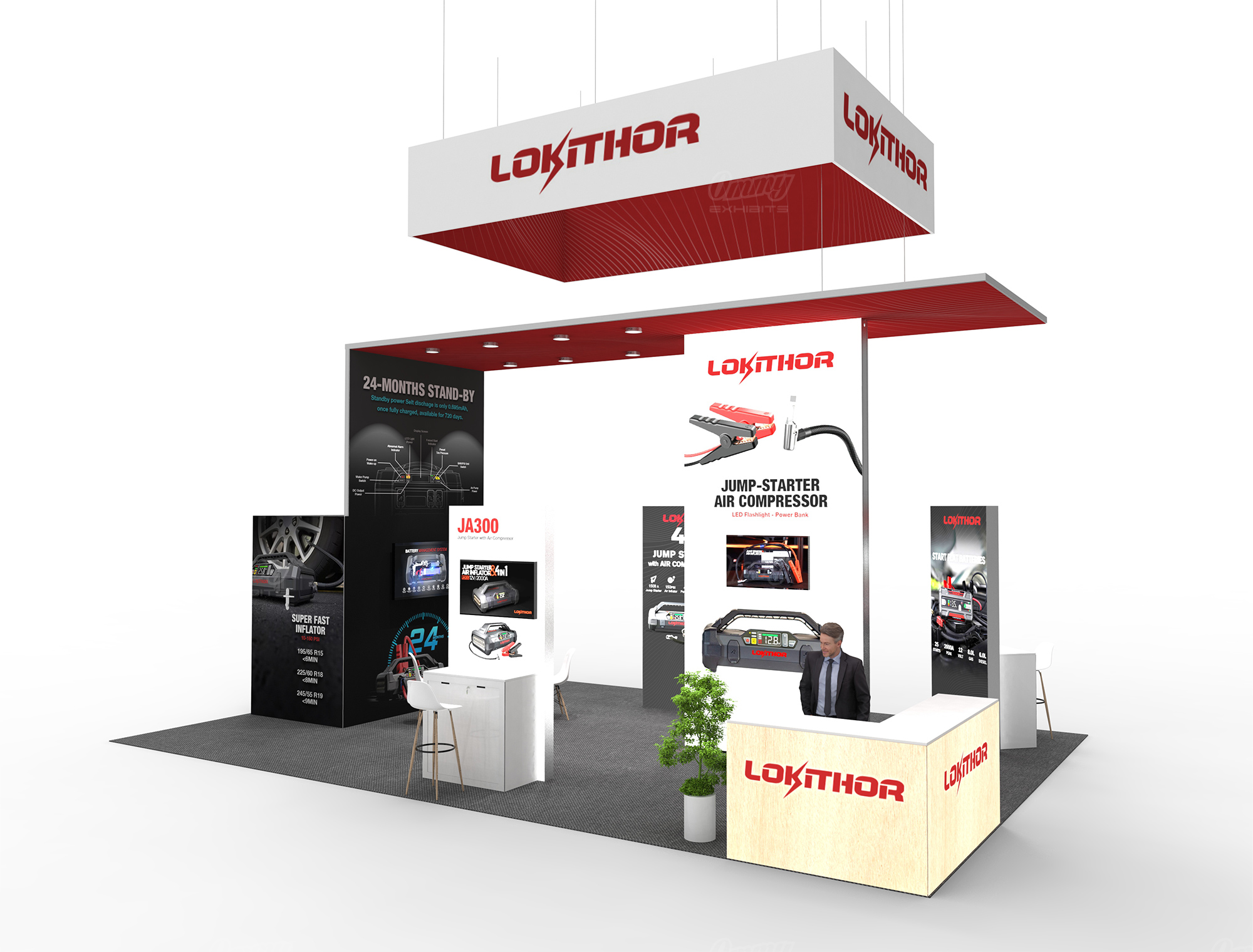
Turnkey support gives one team accountability for the sequence instead of handing each stage to a different vendor. For a team working from another city, a Las Vegas booth rental package needs three things: a pre-build preview before the booth ships, project management that holds artwork, approvals, freight, and show-service deadlines, and an on-site supervisor on the floor during install and handoff. Our RLU2030-35 20×30 island package includes the preview, project management, and on-site supervisor within the listed scope, with dismantle closing the loop after the show.
The preview is the part remote teams underuse. Standing in front of a half-built booth before it leaves the shop shows what a rendering cannot: how the suspended ceiling reads from the aisle, whether the conference table area feels crowded once furniture is in, and whether the corner reception counter sits where you expected. Corrections made at that point cost a shop adjustment. Corrections discovered on the show floor cost a show.
What a Las Vegas in-house shop changes for setup
A booth built in the same city where it is installed removes a common source of delay. We run our own shop in Las Vegas, so the build, graphics, and install crew work from the same drawings in the same time zone. When a lightbox needs a different panel or a printed graphic arrives with a color shift, the conversation happens on the shop floor rather than across three time zones and a freight forwarder. Custom exhibit work runs coast to coast, while the in-house shop is a Las Vegas capability.
How on-site supervision supports a clean handoff
The supervisor is the person your team reaches and the person the venue reaches. That role walks the booth during install, checks the build against the approved plan, manages the handoff when the space is turned over to your staff, and stays reachable through show days for issues that surface once attendees are on the carpet. When your team is remote, this replaces a phone tree with one contact who already knows what the booth should look like. Small decisions—a swapped sign or a moved counter—get handled in minutes instead of becoming a next-day problem.
How remote exhibitors coordinate a Las Vegas booth rental
Remote coordination works when you front-load decisions. The show date is fixed, so the calendar runs backward from move-in: artwork locked early enough for production, preview approved with room to correct whatever the build reveals, freight booked against the venue’s target date, show services ordered for the approved plan, and a named person on your side who can sign off on small changes during the show. Time zones are the quiet risk. A question raised at the end of a European workday lands in Las Vegas mid-morning, which works on a live phone line but becomes painful in an email chain waiting on a decision.
During a client’s show or install, we stay reachable around the clock; outside those windows, our regular office hours are Monday through Saturday. Coast-to-coast service means the same team can follow your calendar into other U.S. cities, while the in-house shop remains a Las Vegas capability. Venue rules and official contractors control material handling, rigging, and electrical labor, so the supervisor builds the install plan around those windows. The most useful habit for a remote team is a single written contact sheet: who approves artwork, who approves on-site changes, who signs at the dock, and which number rings when something goes wrong. Circulate it internally before move-in, so three people on your side do not give the crew three different answers.
Conclusion
A Las Vegas show date rewards exhibitors who treat setup as a coordinated sequence rather than a shipping event. The booth design gets approved early, the freight gets booked, and the local handoff decides whether your team walks into a finished space: a shop that can fix things before they ship, a supervisor who owns the floor, and a coordination rhythm that works across time zones. Send your show date, booth size, and artwork status to start a quote and confirm preview timing, freight targets, and the approvals your team needs before move-in.
See more finished work on our project gallery.
Frequently asked questions
What does turnkey booth support cover in Las Vegas?
Turnkey support covers the sequence from pre-build through dismantle: booth hardware, custom graphics, single-color carpet, furniture and AV as available in stock, the pre-build preview in the shop, project management for artwork and freight deadlines, on-site supervision during install and handoff, and takedown after the show. Packages such as RLU2030-35 include the preview, project management, and on-site supervisor within the listed scope. Venue contractors set the windows for material handling, rigging, and electrical labor; the supervisor builds the install plan around those windows.
How does on-site supervision work during booth setup and handoff?
The supervisor works the floor during install, checks the build against the approved plan, coordinates with venue crews on timing and access, and manages the moment the finished booth is turned over to your staff. After handoff, that person stays reachable through show days as your single point of contact, so issues that appear once attendees arrive get handled without your remote team rebuilding a phone tree. You get one name who already knows the booth, and the crew gets direction without waiting on a reply from another time zone.
Can an exhibitor outside Nevada coordinate a Las Vegas booth rental remotely?
Yes. Remote coordination runs on a backward calendar from move-in: artwork locked for production, preview approved with time to correct, freight booked to the venue’s target date, and a named approver on your side for on-site changes. During show or install periods we stay reachable around the clock; contact form submissions receive a reply within one business day. Coast-to-coast custom exhibit service lets the same team follow your show calendar into other U.S. cities, while the in-house shop remains a Las Vegas capability.